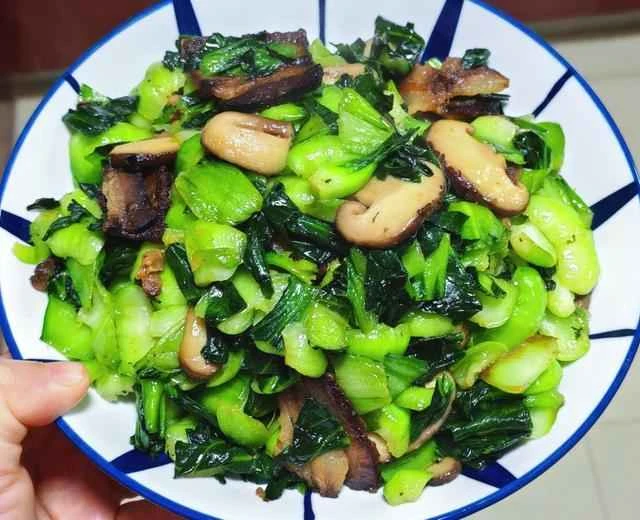
First, let's explain what "hand-squeezed vegetables" are. Simply put, it's a method of quickly removing moisture from leafy greens by salting and kneading them. This process makes the vegetables drier and crisper after stir-frying. According to Baidu (a Chinese search engine), hand-squeezed vegetables are a semi-finished product made by salting leafy greens and then squeezing them by hand to remove excess water. They are typically used in stir-fries to make them crisper and more flavorful. This method is particularly popular in the Jiangsu and Zhejiang regions. A common method is to wash and chop small green vegetables, add salt, and squeeze out the water by hand to create fresh pickled vegetables. Hand-squeezed vegetables can be stir-fried with various ingredients, such as mushrooms and edamame, making them even more delicious. But I don't understand why so many bloggers, following the crowd, categorize this dish as a typical Jiangsu, Zhejiang, and Shanghai home-style dish. Did you do any research before making this categorization? At the very least, this is not a typical Shanghai home-style dish! It's almost non-existent in Jiangsu! Only some areas in Zhejiang have this practice! My grandparents are from Shaoxing. When I was little, my grandma made many traditional Zhejiang home-style dishes, such as braised pork in soy sauce, stir-fried pickled vegetables and mushrooms, fermented tofu skin, fermented winter melon, fermented amaranth stems, pickled bamboo shoots with sweet bean sauce, soy sauce radish soup, sweet and sour shredded mustard greens, and so on. I'll try to recreate them when I have time.
Materials
Hand-kneaded vegetables and stir-fried mushrooms (detailed recipe)
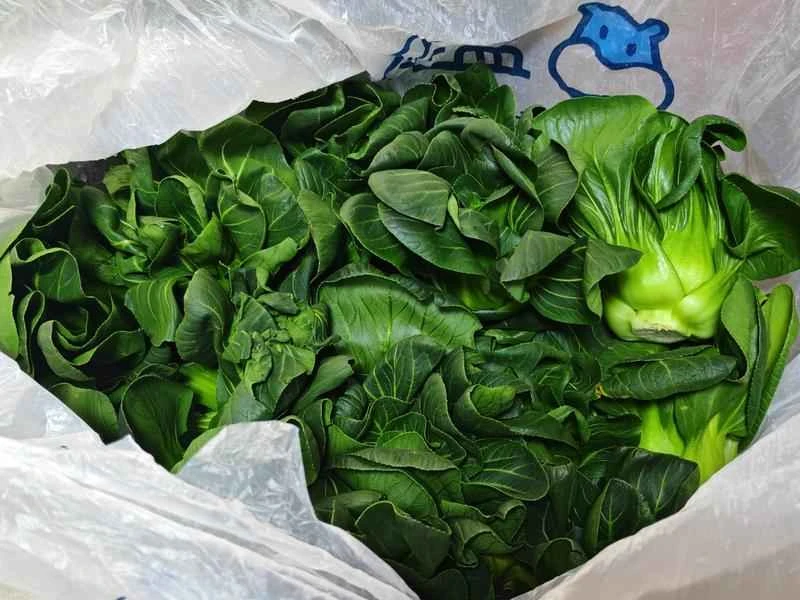
It wasn't called "hand-pinched vegetables" before, it was called "quick-cured," which means quickly cured with salt. Both meat and vegetables can be used, such as quick-cured ribbonfish. Choose short, plump greens from winter. Generally, choose short-stemmed vegetables, small pond vegetables, or Taihu Lake vegetables.
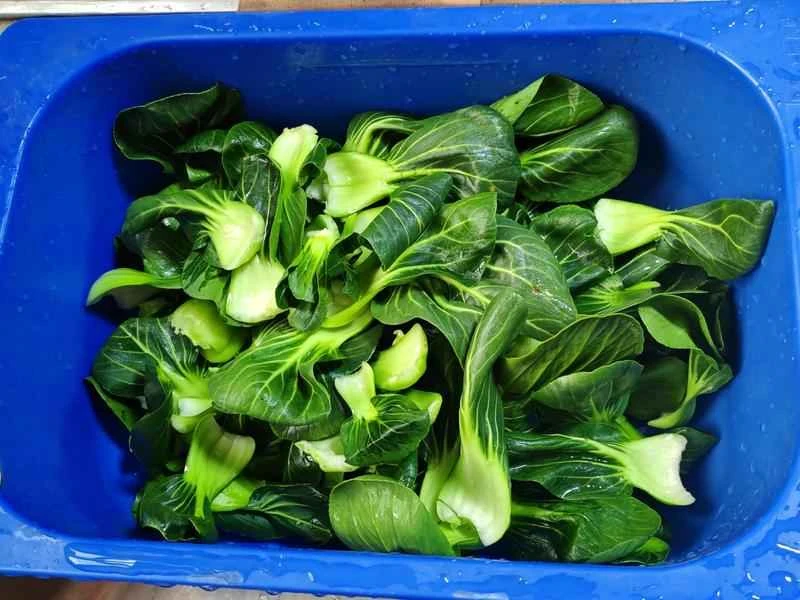
Use the outer, larger leaves of the cabbage, also called cabbage skin. Wash and drain them. The inner heart of the cabbage is more tender and soft. My grandmother used to be reluctant to pickle it, as she usually used the heart for soups, noodle soup, or rice cake soup. The outer skin has relatively tougher fibers, so it will be crisper after pickling.
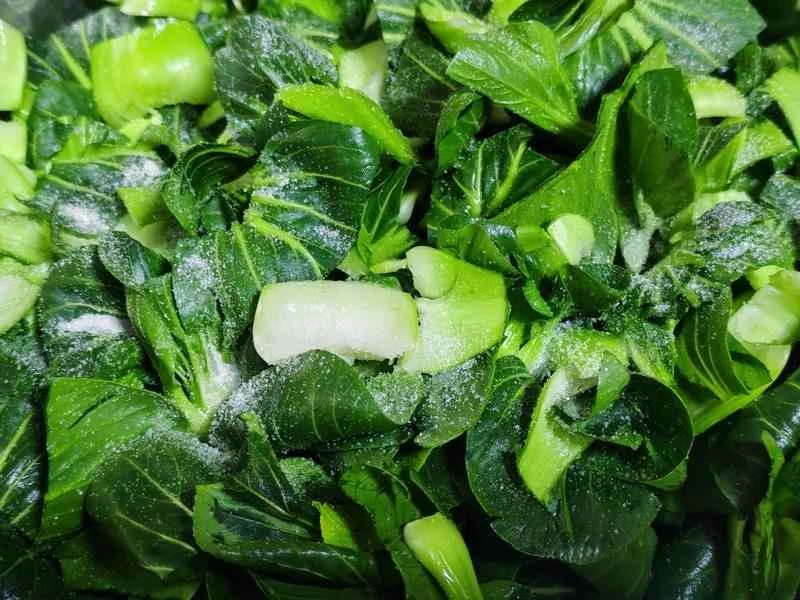
Cut the vegetables into pieces about 1.5 cm long, sprinkle with 3 teaspoons of salt, and toss to coat evenly. My family's knife skills are just not great, so please forgive me 😅
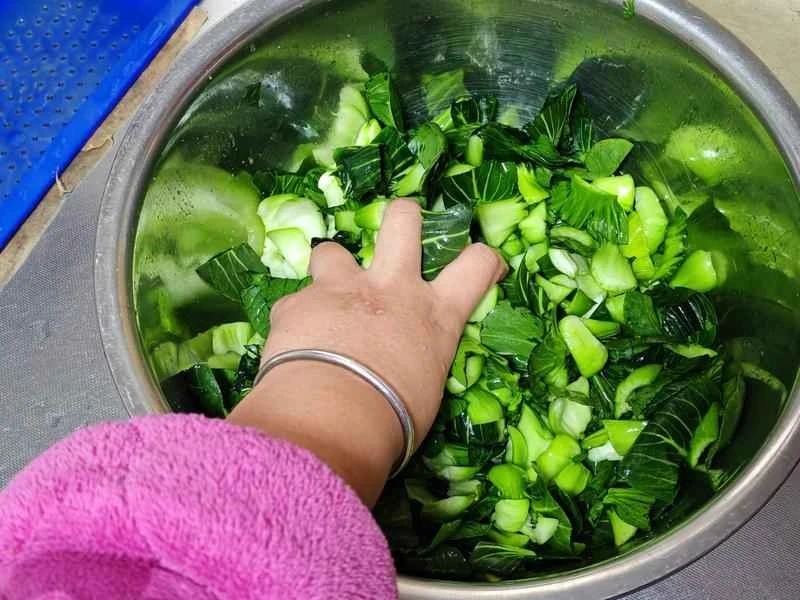
Marinate for 15 minutes first, then start kneading the vegetables by hand, being careful not to crush them!
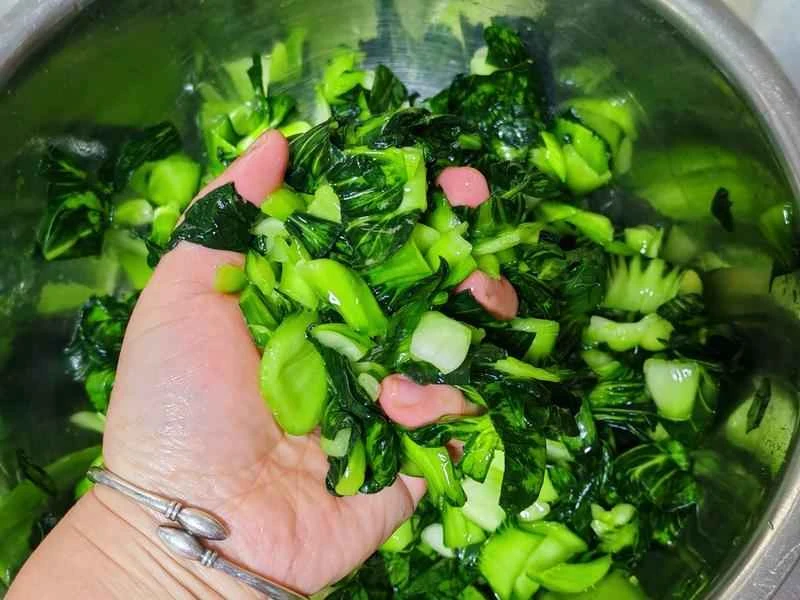
After kneading for 3 minutes, the vegetables will become initially dehydrated like this. Then put the vegetables in a bowl and let them marinate for another hour.
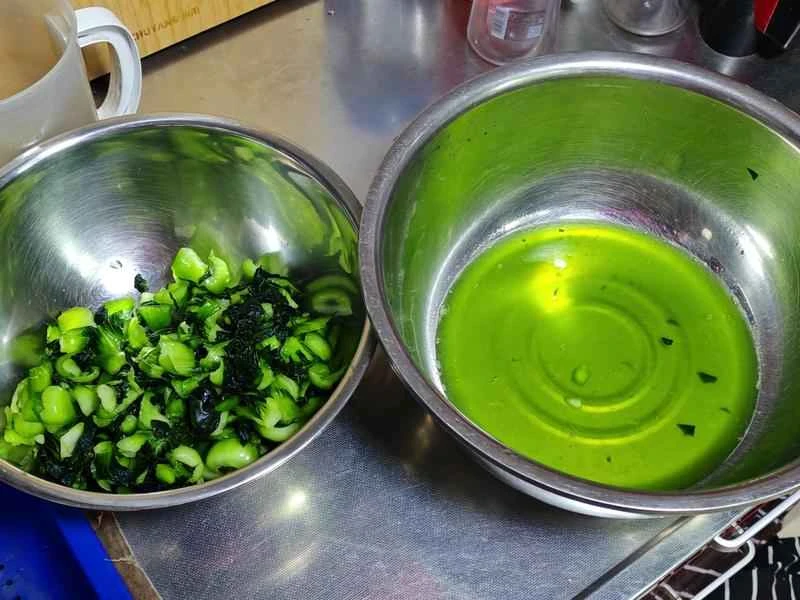
An hour later, squeeze the water out of the vegetables with both hands as much as possible. See the large bowl on the right; that's the squeezed vegetable juice.
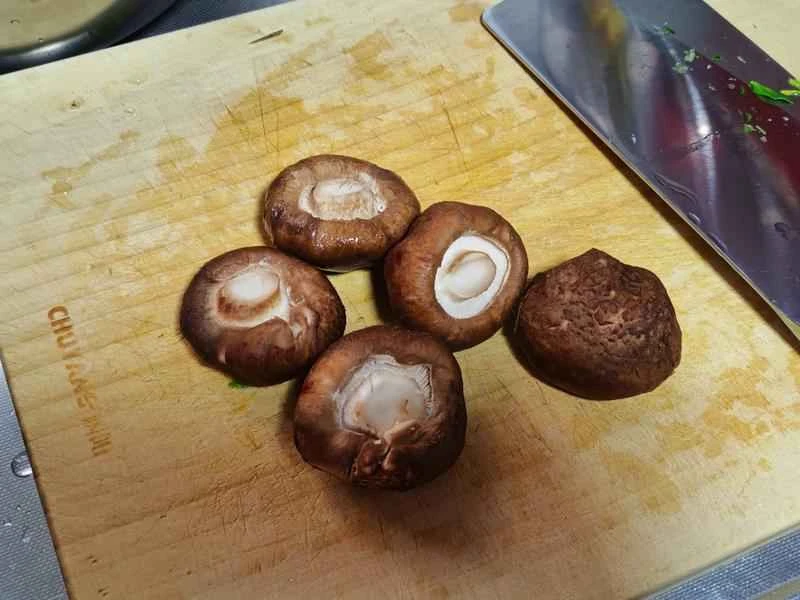
Wash the shiitake mushrooms and squeeze out the excess water. Note that fresh shiitake mushrooms absorb a lot of water and are quite resilient, so be sure to squeeze out the water before cutting! If using button mushrooms, do not squeeze out the water forcefully, as tender button mushrooms will crumble easily when squeezed!
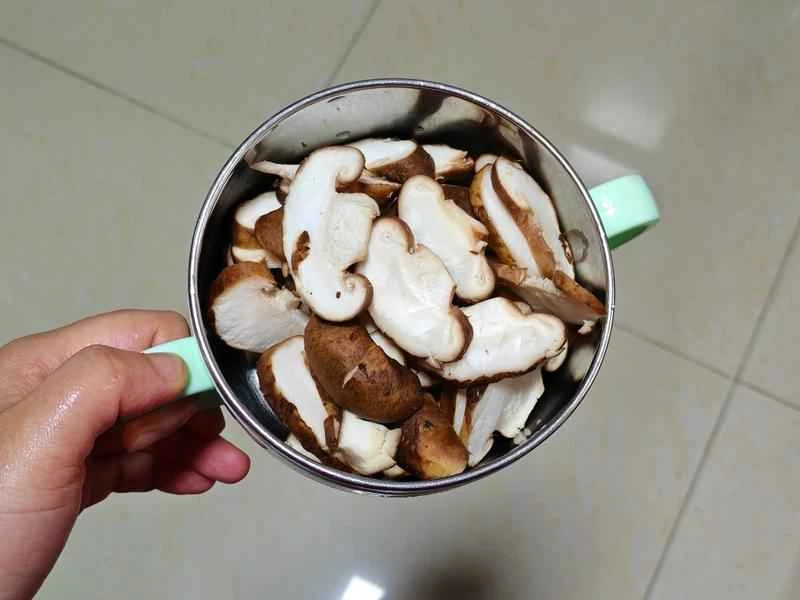
Slice thinly and set aside.
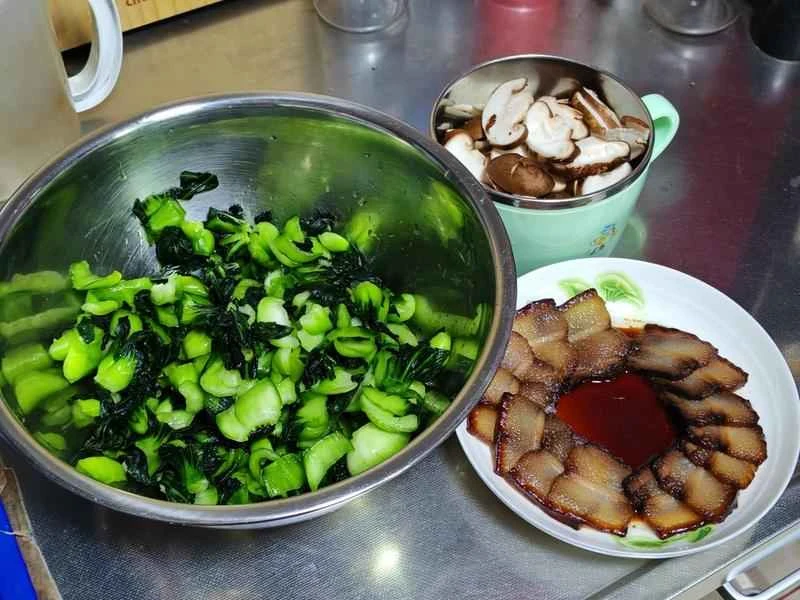
These are the prepared ingredients. Grandma says it's best to use animal fat when stir-frying vegetables, especially adding a few slices of fatty pork belly in soy sauce—it will be even more fragrant! See here for the recipe for soy sauce pork: https://www.xiachufang.com/recipe/107486305/
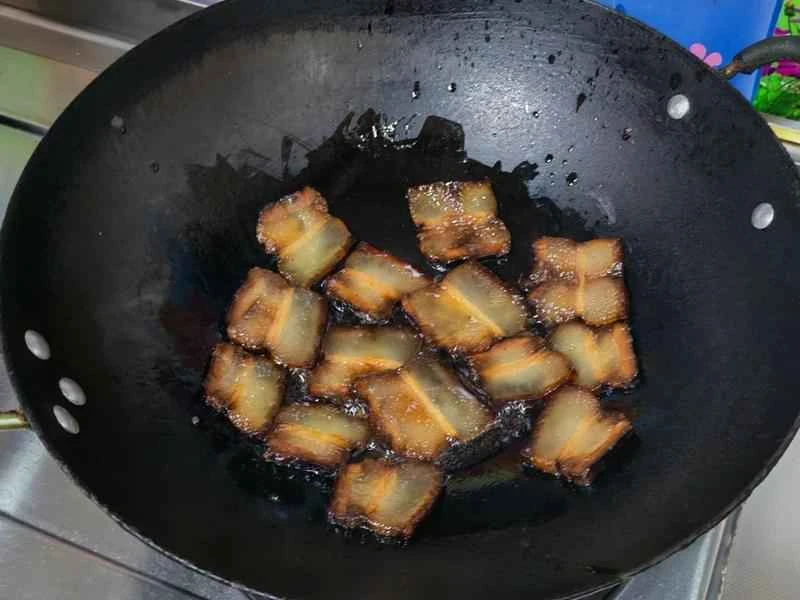
Heat the pan, add some oil, and then add the soy sauce-braised pork belly slices. Fry over low heat for about 15 seconds. Be careful not to fry for too long, or they will burn!
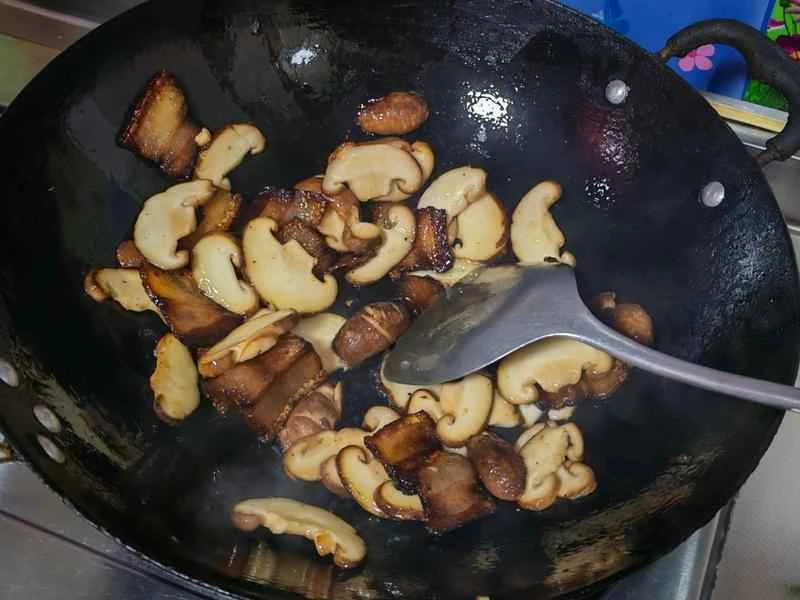
Then add the sliced shiitake mushrooms, turn to medium heat, and stir-fry until the mushrooms soften.
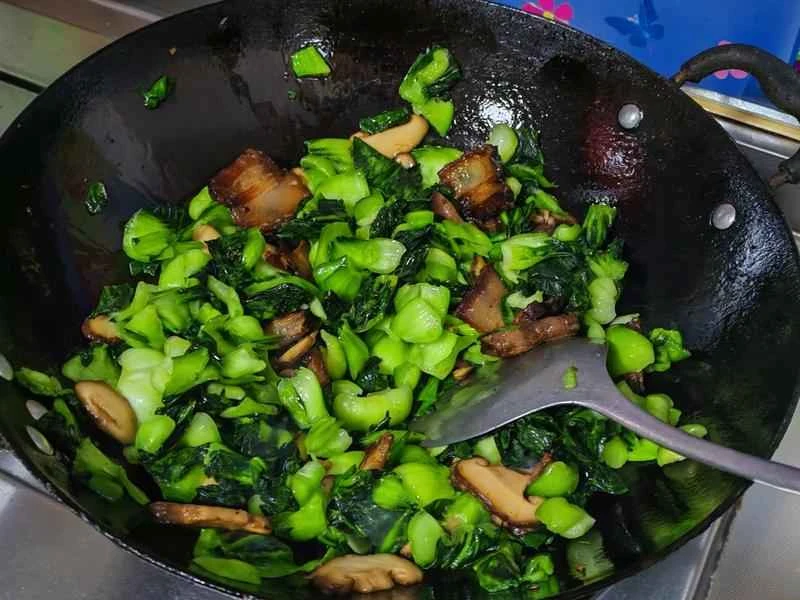
Turn the heat up again and add the greens.
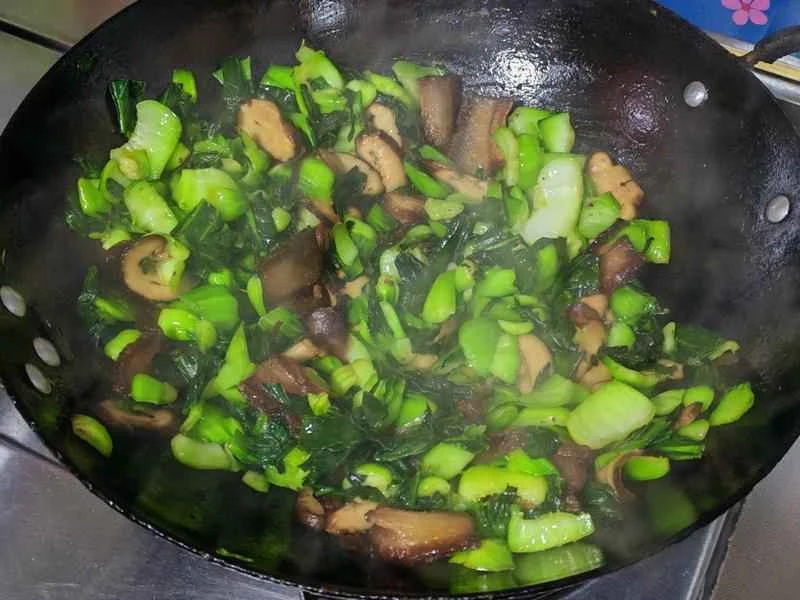
Stir-fry quickly for 1 minute, then add 1 teaspoon of sugar and continue to stir-fry quickly for another minute! The heat should be high; you can see white steam constantly rising as you stir-fry!
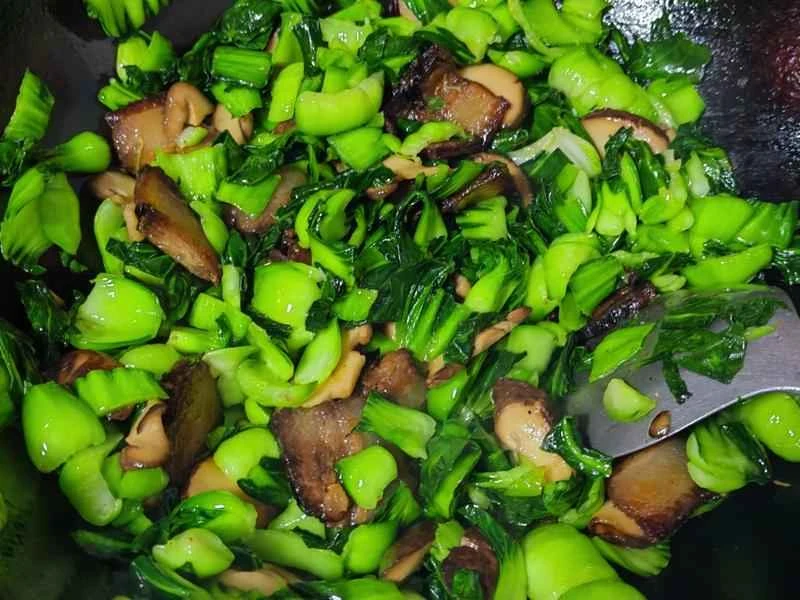
Stir-fry for 2 minutes, just until the greens are cooked through. Note: Be quick! Do not cover the pot and simmer! Overcooking will make the greens soft and mushy. Large leafy greens, if overcooked, easily become two transparent sheets, with the fibers in the middle becoming mushy and losing their crispness. 😅
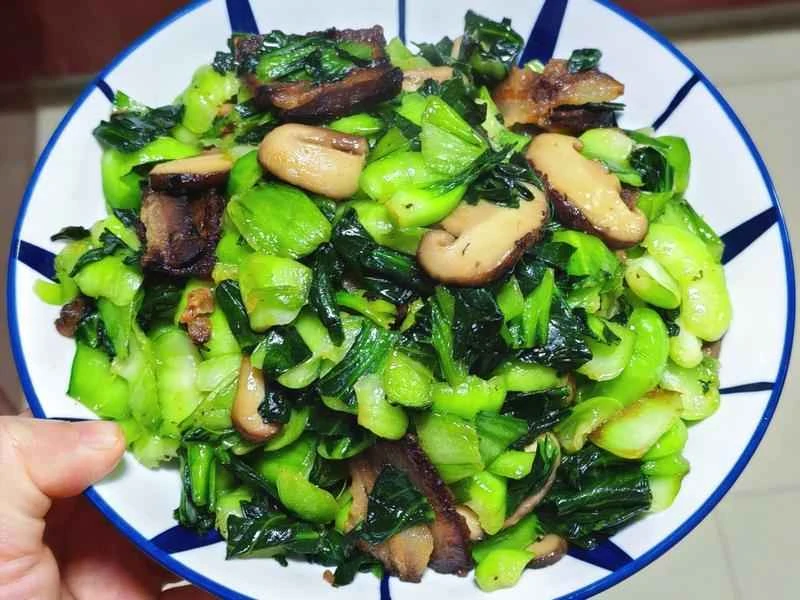
Plate and serve. Compared to regular stir-fried vegetables, this hand-pulled vegetable dish has almost no broth, and the stems are incredibly crisp and refreshing!
Tips for hand-kneaded vegetables and stir-fried mushrooms (detailed version)
1. Don't add chili peppers or garlic! 2. Don't cut the vegetables too large; try to cut them into uniform sizes. 3. Use more oil than usual for stir-frying. Hand-pulled vegetables don't have much broth to begin with, and too little oil will make them dry and unappetizing. 4. Salt was already added during marinating, so you don't need to add more salt while stir-frying. Only add a small amount of salt if you feel it's bland before taking it off the heat. 5. Be sure to add a little sugar; a sweet and savory flavor is what makes this vegetable dish delicious. 6. You can substitute shiitake mushrooms with button mushrooms or venison mushrooms. You can even make variations like stir-fried hand-pulled vegetables with taro, shredded pork, or edamame, etc. 7. If you don't eat meat, you can omit the pork belly and replace the lard with rapeseed oil.