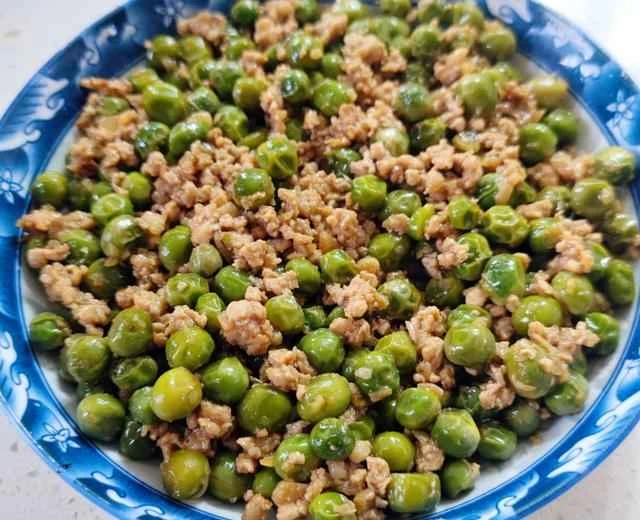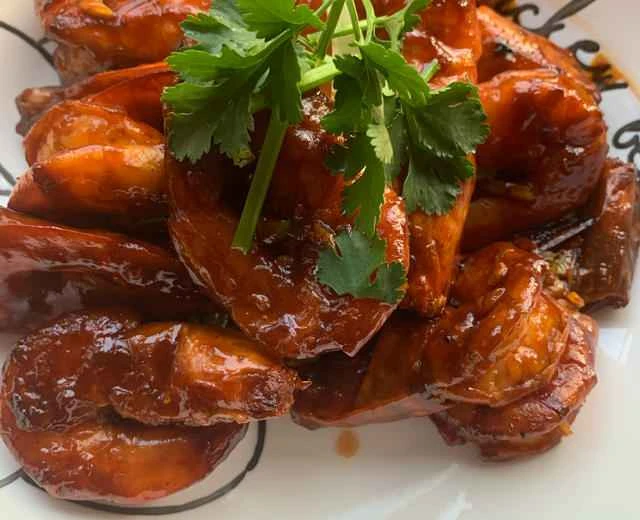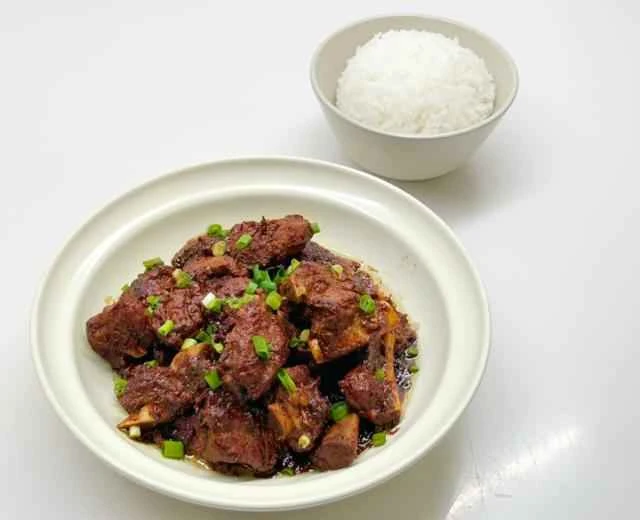
Want to bring your own lunch to work? Want to eat well? But worried about ribs being hard to cook and not getting the flavor in? One pot, one pound of ribs, minimal ingredients, minimal steps, set an alarm, no need to constantly watch the stove, and you can whip up a pot of "Braised Ribs" in an hour or two. Make a pot on Monday night, divide it into three containers, refrigerate, and microwave for 90 seconds. The aroma of the sauce permeates the meat, and my colleagues are lining up to ask for the link. This time, I'm using my old partner, June Fragrance Doubanjiang (fermented broad bean paste), which provides a perfect balance of sweet, savory, and salty flavors. Even those with zero cooking skills can replicate a chef's masterpiece.
Materials
Delicious and fragrant | Braised pork ribs | Minimalist hearty dish recipe explained | Steps for making a bento box for office workers
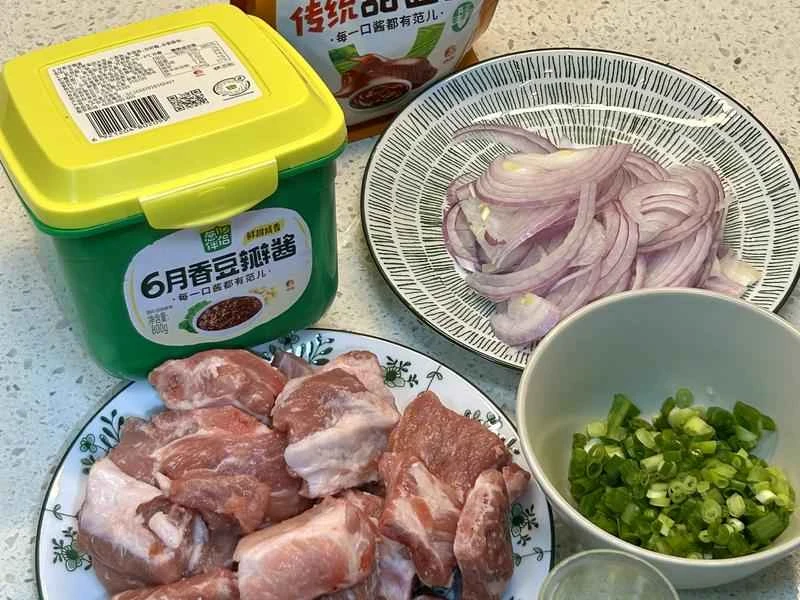
Prepare all the ingredients: Approximately 500 grams of pork ribs, preferably purchased from a fresh food supermarket for cleanliness and hygiene, and which will have already undergone aging treatment. Onions, finely sliced to enhance the meat's aroma and rich flavor; the onions will not be visible in the final product, so those who don't like onions don't need to worry. A small amount (20 grams) of vegetable oil, used later to enhance the onion's aroma and improve the ribs' color. Scallions, chopped into small pieces; they not only provide aroma but also improve the dish's appearance; optional. Both the fermented bean paste and sweet bean sauce are from the well-established brand "Congbanlu".
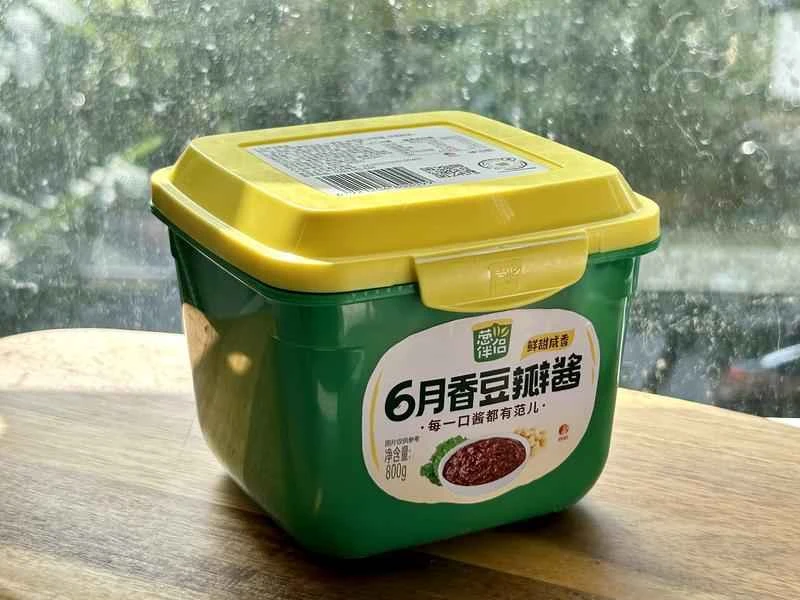
Congbanlu June Fragrance Doubanjiang (Scallion Companion June Fragrance Doubanjiang) was originally the perfect companion to Shandong's traditional "scallion dipping sauce." Through years of cooking experience, I've found it particularly suitable for pairing with various meat dishes. This naturally fermented sauce, with a fermentation period of over 90 days, provides a very rich yet harmonious aroma and flavor. It's especially helpful for kitchen beginners.
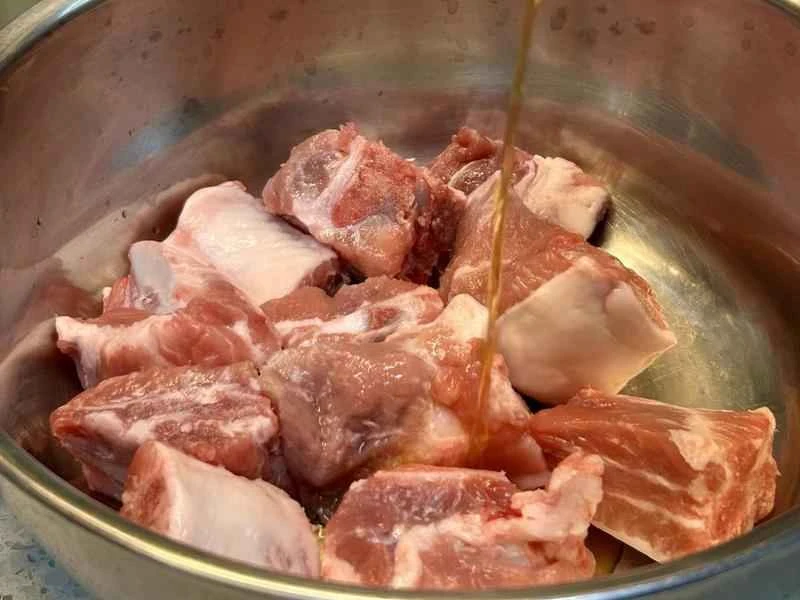
Pre-treating the ingredients beforehand will save you the hassle of blanching and washing the pot later. For 500 grams of pork ribs, add 30 grams of cooking wine first.
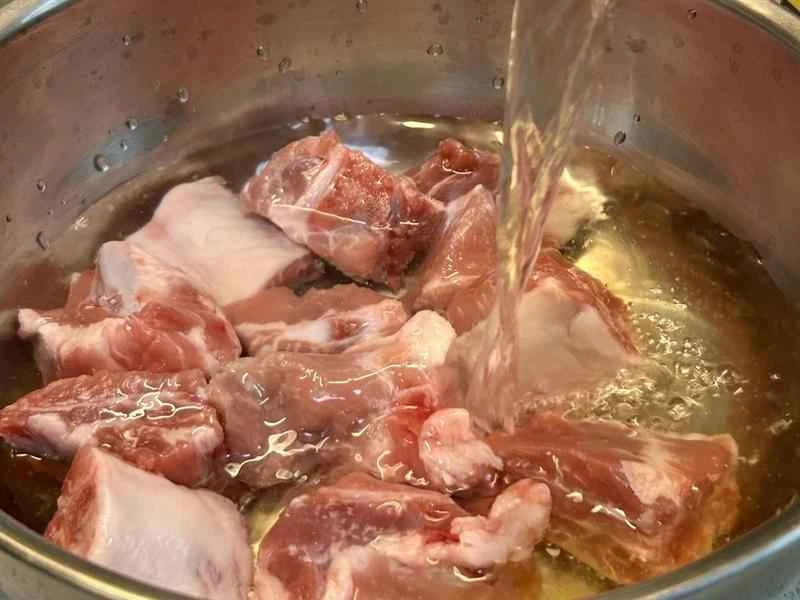
Add enough water to submerge the ingredients; room temperature tap water or filtered water is fine. Soak for 15-30 minutes to effectively remove the pork's gamey smell. If you're in a hurry, you can also put it in an airtight container and refrigerate it beforehand; it will be fine overnight or even a day. This way, you can take it out and cook it whenever you want.
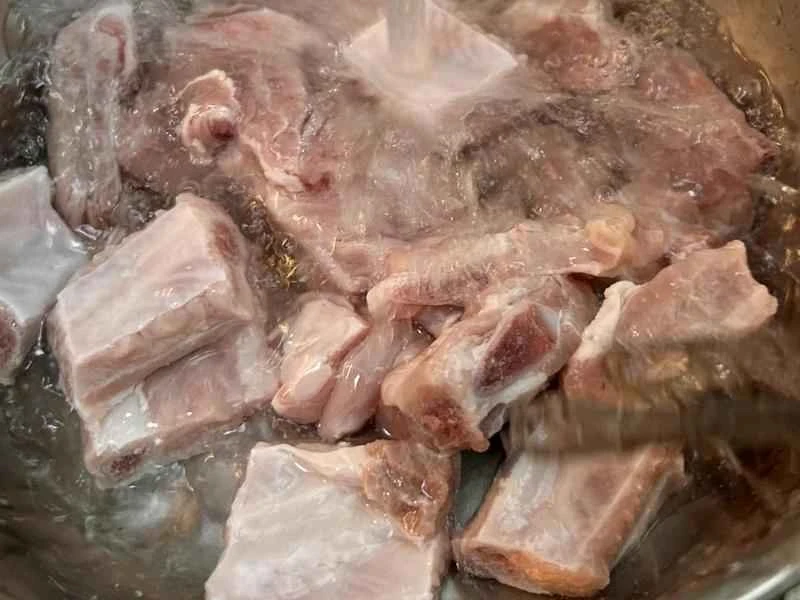
After soaking the ribs, rinse them twice with tap water and drain off the excess water.
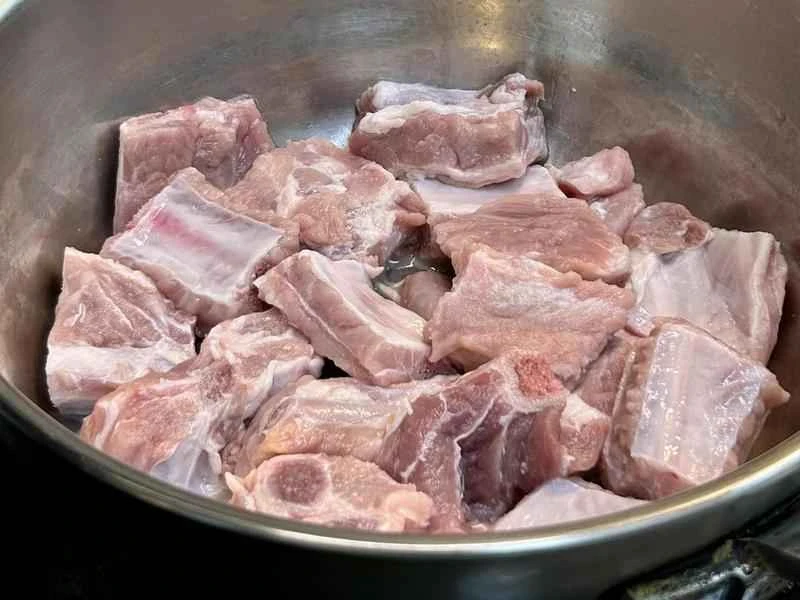
Without changing the pan, lay the ribs flat on the bottom of the pan, then turn on medium heat and slowly fry them. At first, water will be released; do not flip them. Wait until the water evaporates and you hear a sizzling sound before flipping them.
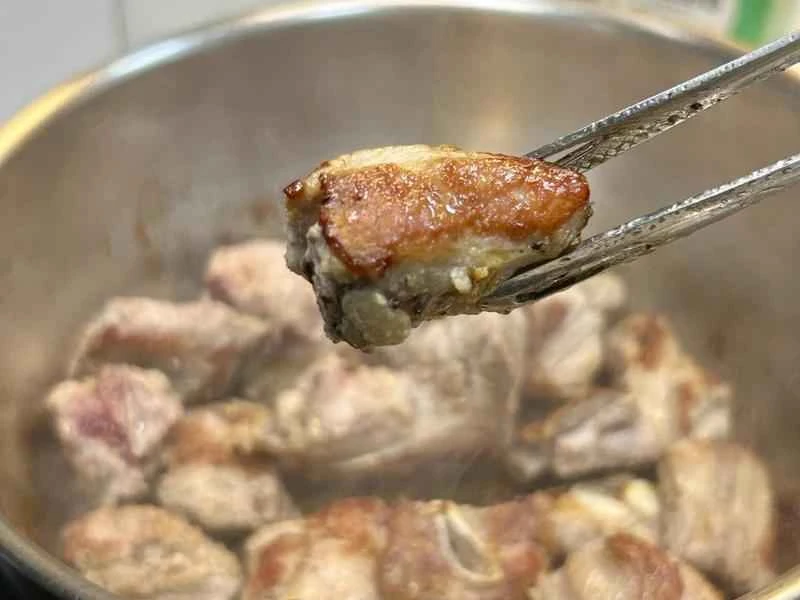
Wait patiently, fry slowly, and turn as little as possible. Continue until both sides are golden brown and the pan is filled with a fragrant aroma. Don't worry if the bottom of the pan turns a dark brown color; this is an important source of the aroma later.
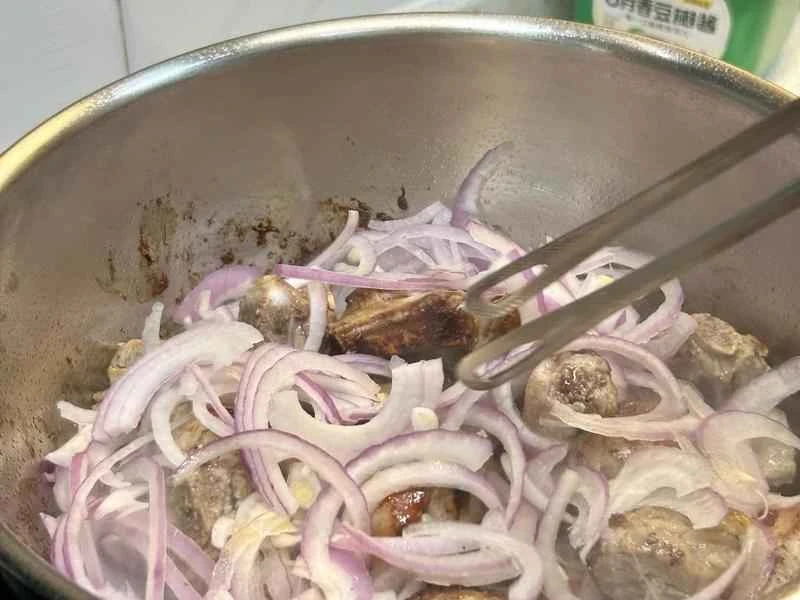
Add the sliced onions and turn the ribs over.
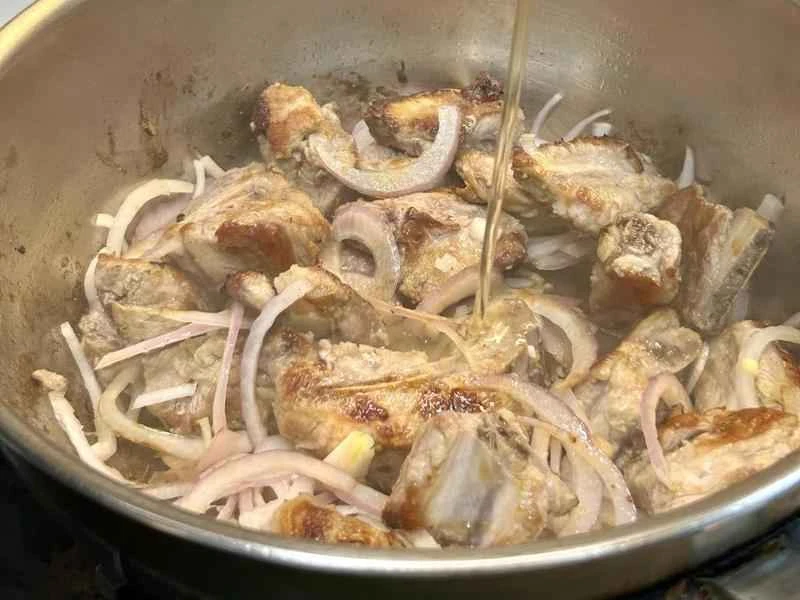
Add 20 grams (about 2 tablespoons) of vegetable oil and stir well, making sure all the onions are in contact with the bottom of the pan for even heating.
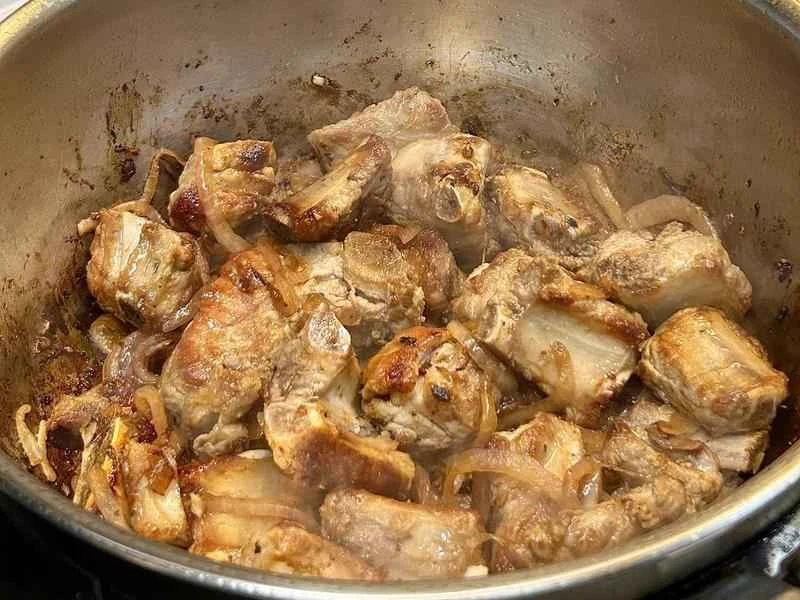
As the onions are heated, they gradually become translucent, turn a dark brown color, and become soft and mushy; this is how you get caramelized onions, an important seasoning. At this point, turn the heat down to prevent the onions at the bottom of the pan from burning further.
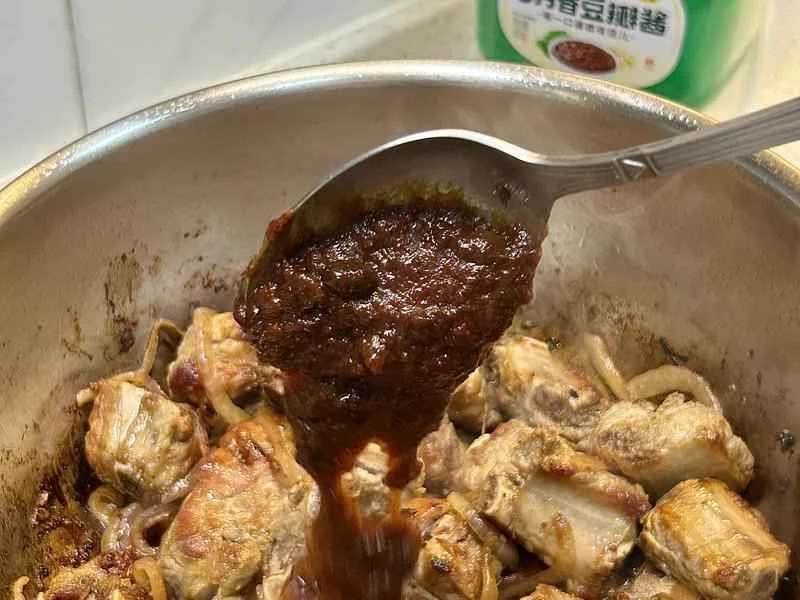
Add two tablespoons (about 35 grams) of Congbanlv June Fragrance Doubanjiang (a type of fermented broad bean paste), which provides a rich, layered savory flavor and sufficient saltiness.
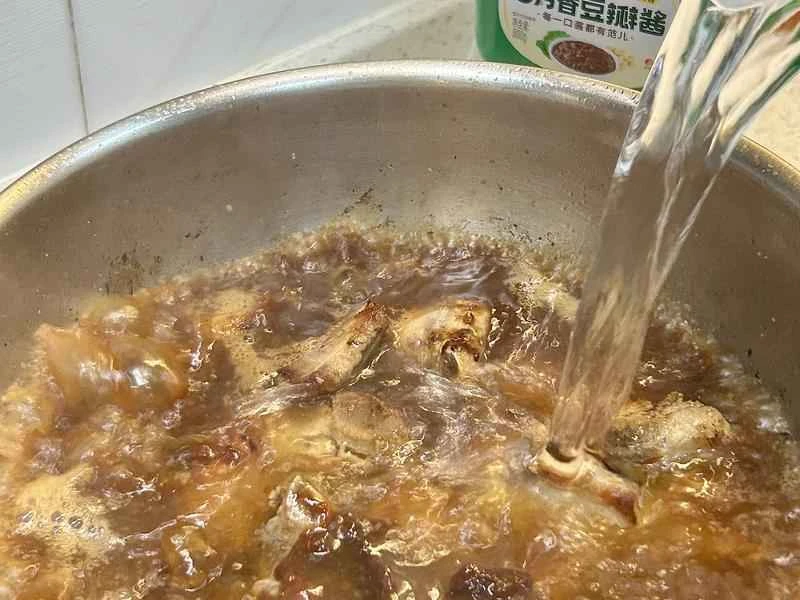
Add sweet bean sauce to provide sufficient sweetness and umami flavor, enhancing the richness of the final product. After adding both sauces, there's no need to stir. Simply add 600 grams of hot water, enough to submerge the ingredients in the pot.
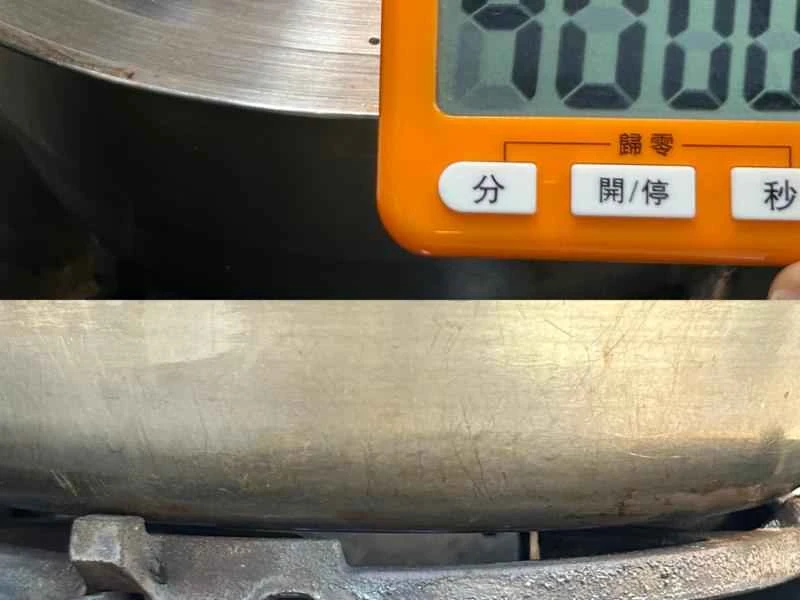
After bringing the water to a boil over high heat, reduce to the lowest heat, cover, and simmer. Set a timer for 40 minutes, which is enough to tenderize the ribs. The lowest heat will prevent the water in the pot from reducing significantly, eliminating the need to open the lid and add water during cooking.
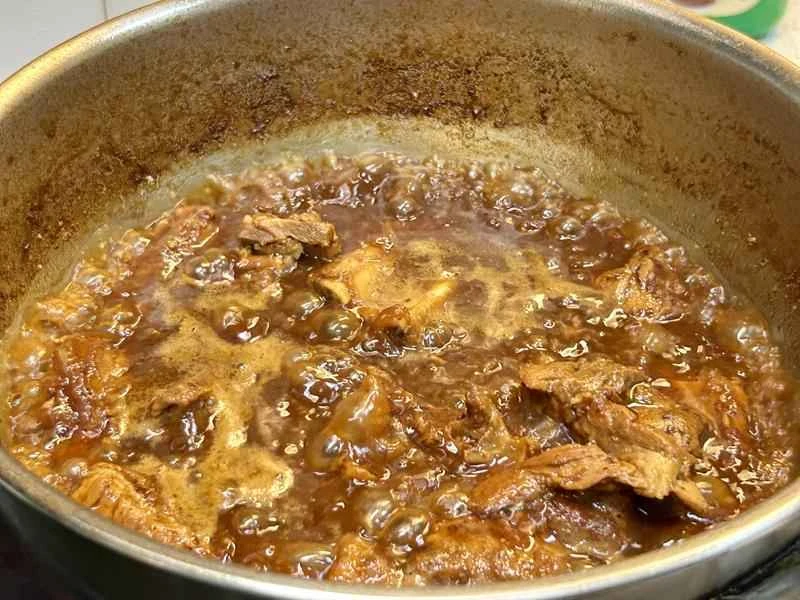
After 40 minutes, open the lid, turn up the heat, and reduce the sauce until thickened.
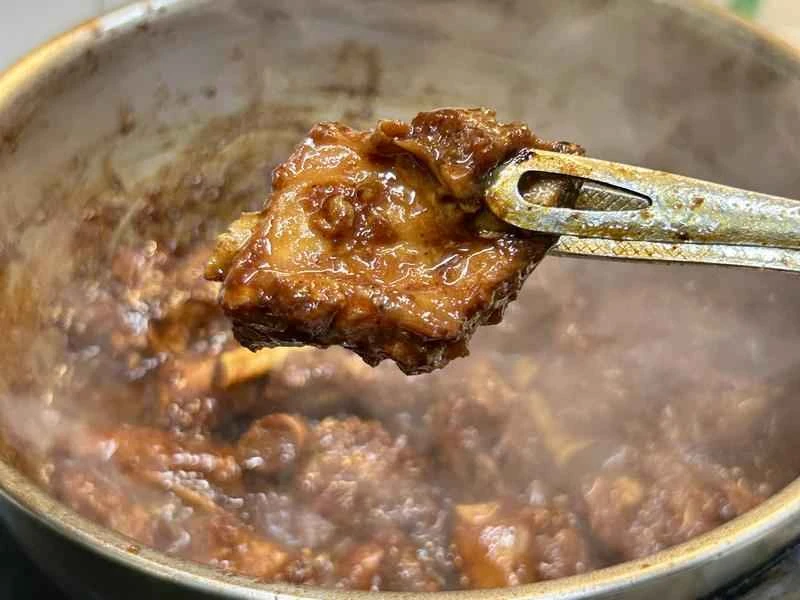
Once the ribs are coated in a thick, rice-porridge-like sauce, turn off the heat and prepare to serve. Can't wait to take a bite!
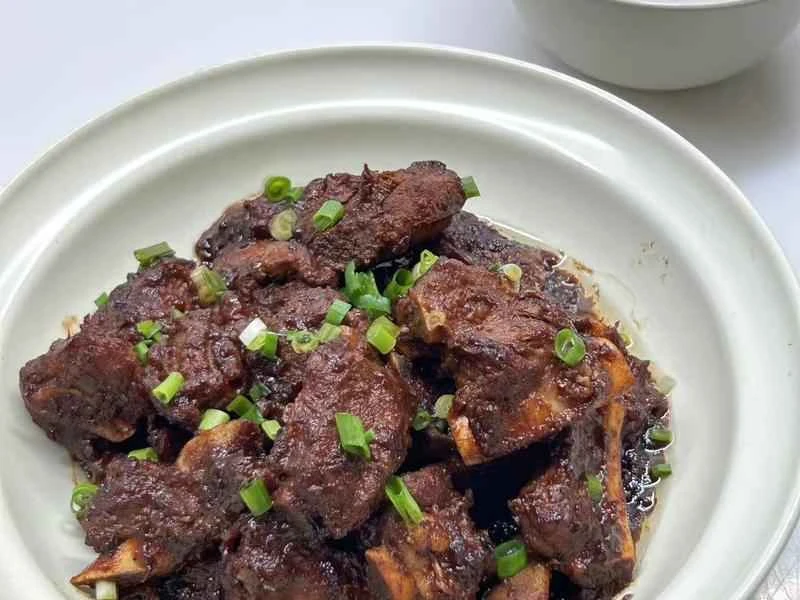
Remove from the pan, plate, and sprinkle with chopped green onions.
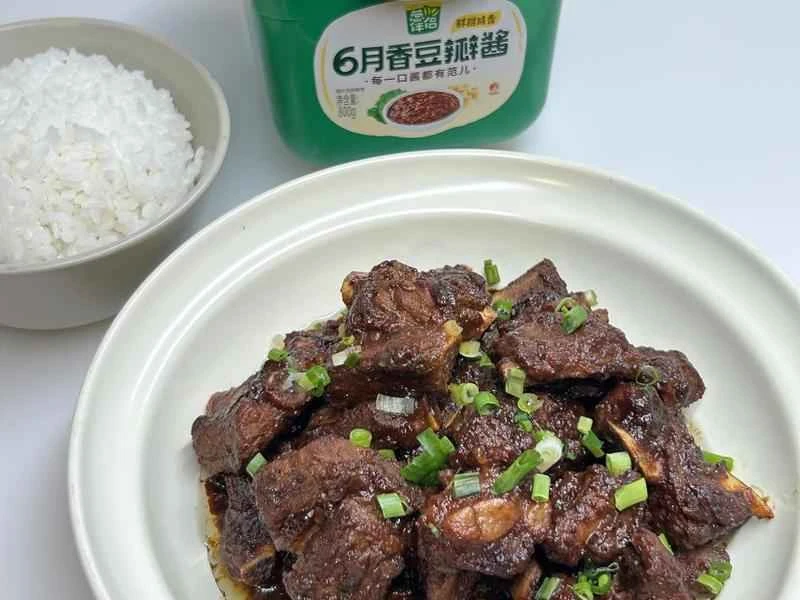
This dish is incredibly delicious with rice and is super easy to make. Now I have another signature dish to add to my repertoire.
Delicious and fragrant | Braised pork ribs | Minimalist hearty dish explained | Tips for office workers' bento boxes
1. Soak the ribs in water, paying attention to the time. At room temperature, do not soak for more than 30 minutes. Otherwise, change the water to eliminate the chance of microbial invasion. If you want to prepare in advance so you can cook whenever you want, store them in an airtight container in the refrigerator. They will be fine to use the next day. 2. Adding cooking wine, Shaoxing wine, or low-alcohol rice wine to the water is suitable. It can effectively inhibit microorganisms and remove the meaty smell. However, it is not recommended to use baijiu (Chinese white liquor) because the aroma of various types of baijiu is too strong and will affect the flavor of the meat. 3. For vegetable oil, peanut oil or olive oil with a rich aroma are preferred, as they help to add layers of flavor. 4. Some people worry that the smell of onions is too pungent. In this recipe, high-temperature frying completely removes the onion's odor, transforming it into a fragrant, caramelized onion, while also increasing the richness of the sauce. Give it a try! 5. The June Fragrance Doubanjiang (fermented broad bean paste) and sweet bean sauce already contain enough salt and umami substances, so there is no need to add chicken essence or MSG. You can enjoy the perfect fusion of the meaty aroma of the ribs and the aroma of the sauce. 6. Due to the long simmering process, there is little difference between adding cold or hot water. However, if you are concerned about operational risks, you can use room temperature water. 7. If your pot is large enough, you can double the amount of this dish. Divide the finished product into portions and refrigerate for a few days. It's perfect for office workers' lunchboxes; just microwave it for a satisfying and delicious work lunch.